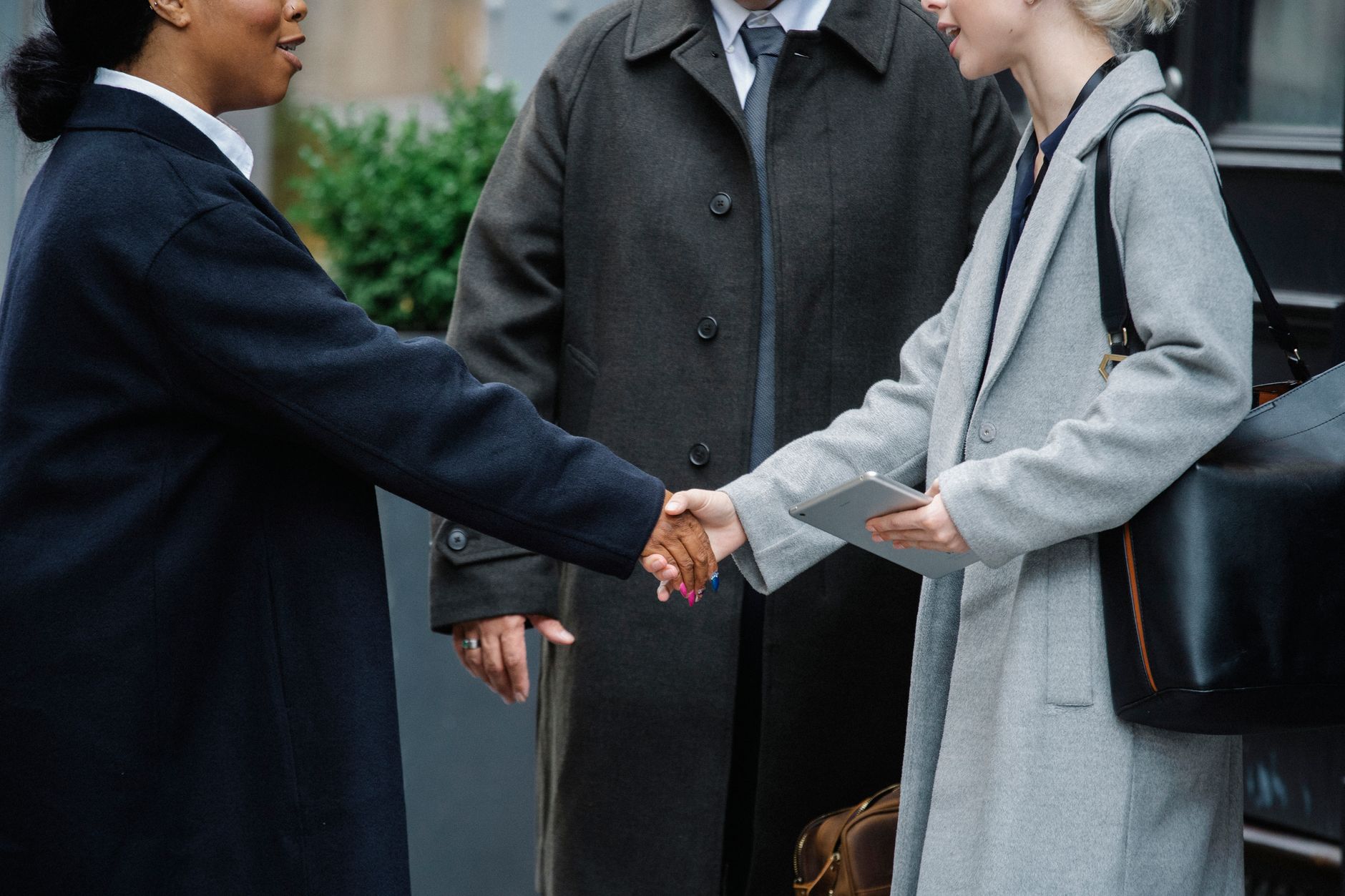
The fundamental differences between negotiating in writing and negotiating orally
When it comes to closing a negotiation, you’re probably wondering whether you should favor written or oral communication, right? The truth is that each of these methods has its specificities, its advantages and its drawbacks. Negotiating in writing is like signing an official contract, an irrefutable record that everyone can consult. Conversely, oral negotiation is more about the charm of face-to-face: spontaneity, emotion and, sometimes, simplicity. The essential difference? Written communication offers crucial clarity, but it can also be open to interpretation if it is not well drafted, whereas oral communication allows you to adapt your speech instantly, but remains vulnerable to each person’s memory or perception. In this world where every detail counts, understanding both approaches helps you make the right choice for your negotiation. Now, here’s where it gets interesting: how do you weigh these advantages and disadvantages to optimize your next agreement?
The undeniable advantages of negotiating in writing
When you choose to negotiate in writing, you give yourself a whole arsenal of assets. First, clarity of exchange. With written negotiation, each party can reread at leisure what was said, which avoids any ambiguity or misinterpretation. Imagine you are in the middle of negotiating a salary increase: you can, for example, precisely target the points you want mentioned and ensure they are clearly presented in the final document. Another sure value of written communication is the ability to keep an indelible record of every step. If a dispute arises, you only need to refer to the written record to assert your case. Furthermore, this method reduces the gray area: you can both refer to a specific document, rather than to a vague conversation or memories that may diverge. Finally, negotiating in writing offers better preparation. You have time to think about every word, every sentence, to formulate your request or your response as precisely as possible. It’s a formidable tool for avoiding misunderstandings and strengthening your position. Besides, in a context where legal security is becoming a priority, notably in 2026, drafting a clear agreement is more strategic than ever.
Major drawbacks of written negotiation
But beware, negotiating in writing also has its pitfalls. The first difficulty is that notorious rigidity. If you rely solely on written exchanges, you risk creating a cold or impersonal atmosphere, which can work against you if the human relationship is important. Between us, a negotiation is also a matter of feeling, rapport, which oral communication greatly facilitates. Next, there is the issue of delay. When you write, you take the time to draft, reread, correct. This can significantly lengthen the process, especially if exchanges are numerous or if the other party takes time to respond. And in a world where every second counts, such slowness can make you lose an opportunity or make you appear unresponsive. Written communication is also less flexible than speech: a poorly chosen word, an awkward sentence, can create conflicts or misunderstandings that are difficult to defuse. You see? Rigor and precision in writing require a real effort of linguistic and strategic mastery, otherwise you risk outcomes contrary to your expectations. Finally, you should also consider that not everyone is comfortable with written exchange, especially in complex or emotional negotiations. This can limit your effectiveness if your counterpart prefers direct contact.
The advantages and drawbacks of negotiating orally: when to favor oral communication
Let’s move on to oral negotiation. Between us, it’s often the preferred method for establishing an immediate bond of trust. Face-to-face, you can capture all the nuances: tone of voice, body language, micro-expressions. All of this helps create a warmer, more human dynamic. And that’s where the charm of the oral works. With oral communication, there’s also the possibility to adapt your speech live according to your counterpart’s reactions. You can bounce back, ask questions, adjust instantly. Moreover, in a context close to that of 2026, where adaptability has become a key skill, negotiating orally allows you to differentiate yourself by showing your flexibility and active listening. It’s also the method that facilitates persuasion. In person, you can use your tone, your pace, your smile to convince more effectively. Finally, it encourages collaboration and direct dialogue. By creating a space for spontaneous discussion, you reduce the risk of misunderstandings and foster a more fluid mutual agreement. Yet be careful, this process is not without its little pitfalls…
The limits of oral negotiation
What can make oral negotiation less ideal is first this famous subjectivity. Because everything relies on memory, emotion, or sometimes even stress. If you don’t take notes, there is a risk that some important points will be forgotten or misunderstood. Between us, a simple sentence can turn into a misunderstanding if your counterpart does not interpret it as you intended. This results in a blur that can become explosive if you don’t rectify it quickly. Next, there is the problem of documentation. Unlike written communication, no one can easily go back over an oral exchange to prove what was said or agreed. This is often a real challenge during disputes or claims, especially in 2026 where traceability becomes essential. Oral negotiation can also be less effective with counterparts who lack responsiveness or listening, making any attempt at agreement more complicated. Finally, you must also keep in mind that this method requires great command of speech and communication skills. Without a certain art, spontaneity can come at the expense of rigor, sometimes leading to compromises or decisions that are not in your interest. So it’s up to you to see if you are sure you can master these nuances so that oral negotiation remains a real asset.
When to choose written or oral communication: a comparative table to make the right choice
| Aspect | Written negotiation | Oral negotiation |
|---|---|---|
| Clarté | Very high thanks to the precision of written documents | |
| Souplesse | Limited, not quickly adaptable | |
| Rapidité | Slower, due to drafting exchanges | |
| Interprétation | Risk of ambiguities if poorly drafted | |
| Relationnel | Less personal, more impersonal | |
| Traçabilité | Unrivaled, all interactions are preserved | |
| Effet de confiance | Less immediate, but lasting | |
| Adapatabilité | Low in real time, but structured | |
| Suitability (adapted to…) | Contracts, complex or formal negotiations | |
| Flexibilité | Low, requires thorough preparation | |
| Intérêt principal | Security and precision | |
| Meilleur contexte | Legal or administrative environment | |
| Avantages | Proof, clarity, legal certainty | |
| Inconvénients | Lack of spontaneity, slowness | |
| Aspect humain | Less expressive, less warm | |
| Interactivité | Limited, unless complemented by meetings |
What are the best moments to favor one method or the other?
It all depends on your objective, the nature of the project, and the context. If you need a precise commitment, an official document or solid evidence, opt for negotiating in writing. On the other hand, if you want to build a relationship of trust, bring warmth to your argument or adapt your speech in real time, the oral will be your best ally. Finally, don’t hesitate to combine these approaches to get the best of each method. For example, you can start with a face-to-face meeting to establish trust, then formalize everything in writing. The key is to be aware of each mode and to know how to use it at the right time. Are you following me?
Transparence : rédaction assistée par IA, informations vérifiées aux sources officielles, relu et validé par un humain. Notre charte éditoriale

Lucas Morel
Décrypte les ressorts de la négociation salariale et partage des méthodes concrètes pour obtenir une meilleure rémunération.
Transparence : rédaction assistée par IA, informations vérifiées aux sources officielles, relu et validé par un humain. Notre charte éditoriale.